A controlled study on human safety for the KLOW blend is absent in the referenced literature.

Thymosin beta-4 has been explored in the context of cell migration, angiogenesis, corneal or dermal repair, and wound healing in both laboratory and clinical studies. Furthermore, there is a lack of a controlled study that confirms the community-reported dosages and frequency presented in the primary chart. Although discussions online feature the KLOW blend as a unified recovery and inflammation research approach, the existing literature assesses its components individually.
Researched for localized tissue healing (angiogenesis), and gut integrity in animal models. Researched for collagen synthesis (antioxidant signaling), and skin and connective tissue remodeling. Not for human or veterinary use, not a drug, food, or cosmetic. Avg content is what the lab weighed against the label — averaged across multiple vials pulled from the lot, with every one printed on the certificate.
BuyKlowPeptide.com shares common ownership with Peptryn, the research supplier referenced on this site. All compounds listed on buyklowpeptide.com are supplied strictly for in vitro and in vivo laboratory research. Rather than a broad marketplace (the site exists to give researchers one place to check sourcing), documentation, and purity standards for this specific blend before ordering. Because these four peptides are so often evaluated together, Klow80 Blend combines them into a single independently verified 80mg vial rather than requiring researchers to source and cross-reference purity across four separate listings. A quick reference on what each of the four peptides in this blend is studied for, and why they’re grouped together rather than sold separately. A tripeptide fragment of alpha-MSH, referenced in inflammatory-response research models.
Reconstitute the 80mg vial with 2–5mL bacteriostatic water depending on desired concentration. Together (these compounds help activate biological pathways linked to faster healing), reduced oxidative stress, and improved cellular function. Includes 2x BPC-157, 2x TB-500 and 2x Tesamorelin with full mixing and administration kit. If we catch you sharing this site on social media (in groups), blogs, or with random people, you will be permanently banned from access. Wondering why some people are unaffected by the pain and reactivity that other users have to deal with?
It is one of the most extensively studied compounds in angiogenesis and wound-healing research (with models focusing on tendon-to-bone healing), new blood-vessel formation, and gastrointestinal tissue repair. The KLOW peptide blend composition is built around a high-mass copper peptide base with three supporting compounds. Where a single peptide targets one pathway — the KLOW blend is built for researchers studying overlapping repair and inflammatory pathways at the same time. The “80” in the name refers to the combined milligram weight of all four peptides in the vial. KLOW 80mg is a pre-formulated peptide blend containing 80mg of total net peptide content across four compounds. This guide covers exactly what is in KLOW, how each compound is studied, how the blend is reconstituted, expected vial longevity, and the quality standards that matter.
What Do People Report About the Klow Peptide?
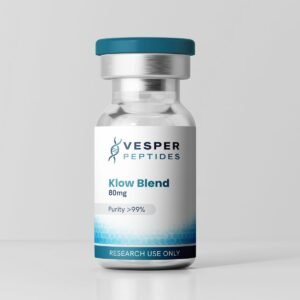
Guidance regarding dosage or administration is not available. The narrative of future advancements in regenerative medicine is unfolding now, through meticulously documented experiments. KLOW signifies the leading edge of peptide stacking, representing a smart combination therapy aimed at multiple regenerative pathways. Rather than focusing on individual pathways, a simultaneous approach to multiple repair mechanisms is undertaken.
KLOW 80 Blend is a premium formulation (meticulously crafted to meet the highest standards of purity), precision, and stability. Therefore, a traditional PCT with compounds like Clomid or Nolvadex is not necessary after a cycle of KLOW. The KLOW 80 mg blend is manufactured under strict quality control standards, ensuring each vial delivers the precise and potent dose as listed. To manage any potential side effects from other compounds in a stack — users often keep Aromasin on hand as an effective aromatase inhibitor.
It does not establish a standard of care — prove safety or efficacy, or recommend human use. There is no controlled human trial of the complete blend in the retained references. Thymosin beta-4 and GHK-Cu have broader research literatures, while BPC-157 and KPV evidence is predominantly preclinical. Because the preserved frequency is once daily — the listed amount per dose is also the displayed daily dose for that phase; it is not a validated clinical recommendation. The page’s reconstitution guide uses 3.0 mL of bacteriostatic water per vial. General subcutaneous peptide administration resources describe clean preparation (a new sterile syringe), appropriate site selection, and site rotation.
In gut and skin models it lowers inflammatory cytokines , TNF-a, IL-1B, IL-6, by inhibiting NF-kB signaling, the master switch for inflammation. The research and anecdotal reports on KLOW (and its individual components) span multiple areas. For a tendon that’s been angry for six months (a gut that flares), or skin that reacts to everything, the KPV is the reason to pick KLOW. In animal studies, it consistently improves healing of gut lining injuries, tendon damage, ligament tears, and even bone fractures. This means faster wound closure and accelerated recovery of muscle (tendon), and connective tissue.
All research involving this material should be conducted in accordance with institutional policies, ethical standards, and applicable laws and regulations. It is not intended for human or veterinary use and has not been established as safe or effective for the diagnosis (treatment), cure, or prevention of any disease. Researchers typically follow established laboratory procedures for handling research materials according to their study protocols.

For internal needs like tendons or the gut, using vial form is preferred. However (to achieve systemic effects), administration via vials is necessary. Most individuals typically settle on a 10-unit draw from a 2 mL mixture.
They are not drugs (dietary supplements), or cosmetics, and are not approved for human or veterinary use in any capacity, including consumption, self-administration, or medical treatment. See the dosage reference guide for reconstitution and literature-cited concentration ranges, or read the individual profiles for TB-500, KPV, and GHK-Cu. HPLC and mass spectrometry are the gold standard for validating bacteriostatic water purity used in peptide reconstitution. Research peptides should be stored lyophilised at -20 °C or below — reconstituted in bacteriostatic water or saline as appropriate, and used within the expiry date stated on the certificate of analysis. Rather than reconstituting and administering four separate compounds, a pre-formulated blend standardises the ratio and reduces preparation variability.
This is reference information for laboratory handling, not human dosing guidance. Because KLOW is a research-use-only material, these calculations are intended for laboratory measurement accuracy and not as a dosing recommendation for people. Reconstitution is the process of adding sterile or bacteriostatic water to the freeze-dried powder to create a measurable liquid.
Verification of Research Access
Reports come from study populations (which usually consist of animal or cell models), and do not guarantee results for any specific individual. Why the descending-frequency shape, not a flat schedule? This information does not constitute personalized medical advice; it represents a documented rhythm of research. The KLOW research protocol comprises three phases of descending frequency, along with an on/off cycle.